
On the Ground at Stabilize Earth

Have you ever been to the Internet Archive building in San Francisco? It’s a former church with big Corinthian columns that the Archive acquired in 2009, and walking into it is a genuinely surreal experience. The main hall is lined with hundreds of three-foot-tall terracotta statues of former employees, standing shoulder to shoulder in the wings and along the back wall like a clay army of librarians. Behind them, server racks hum constantly, because this is literally the building that houses part of humanity’s attempt to preserve the entire internet. And where the hymn numbers would have been posted on the wall, there are instead HTTP status codes and pi written out to nine digits.
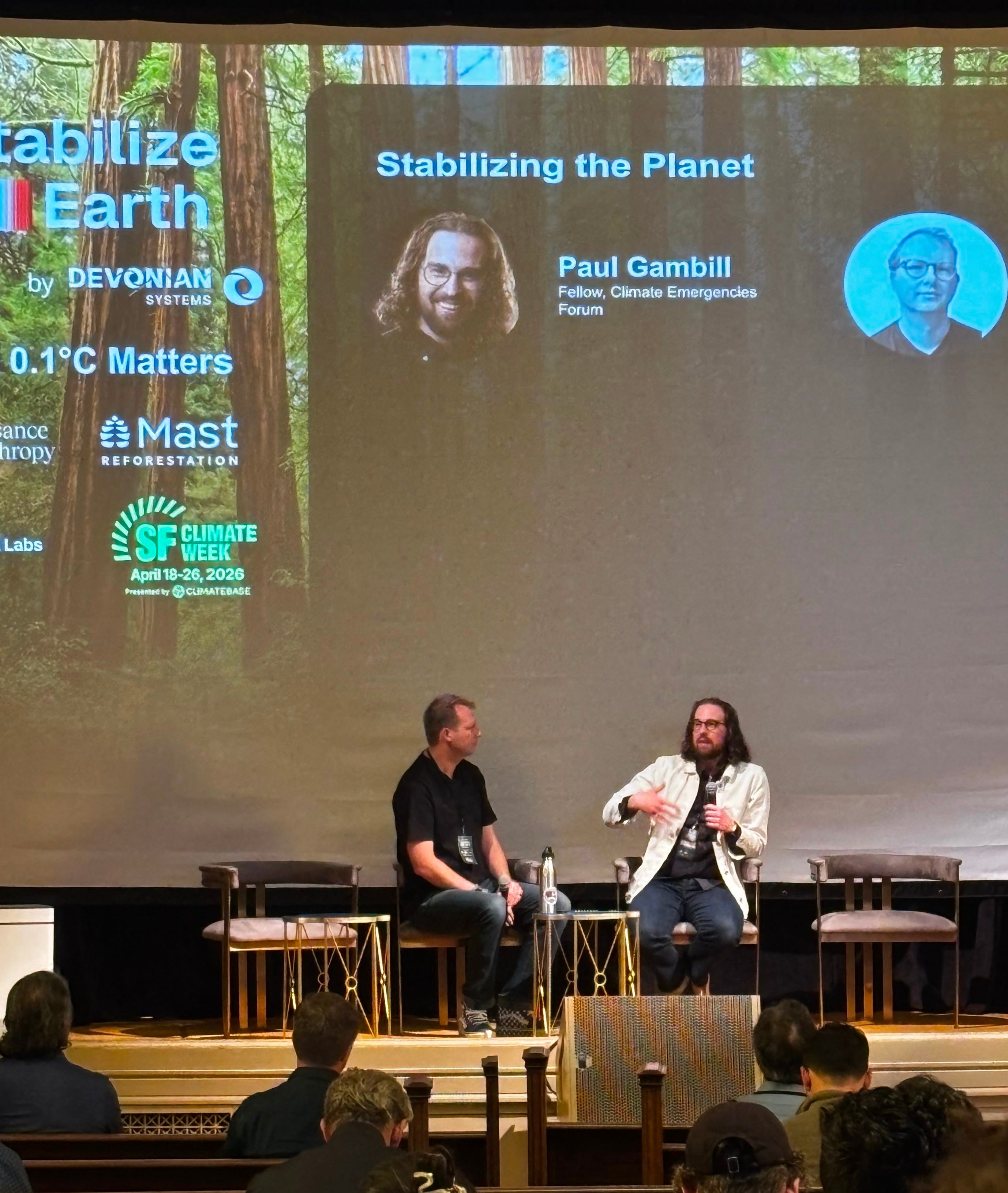
This was the building where, on Tuesday, we hosted the first major public event dedicated to climate stabilization.
The event was called Stabilize Earth, organized with our friends at Devonian Systems as part of SF Climate Week. Over 350 people registered, and somewhere between 250 and 300 were in the room throughout the day. They were journalists, foundation leaders, policy people, climate tech founders, scientists, researchers, venture capitalists, and people looking to break into this space for the first time.
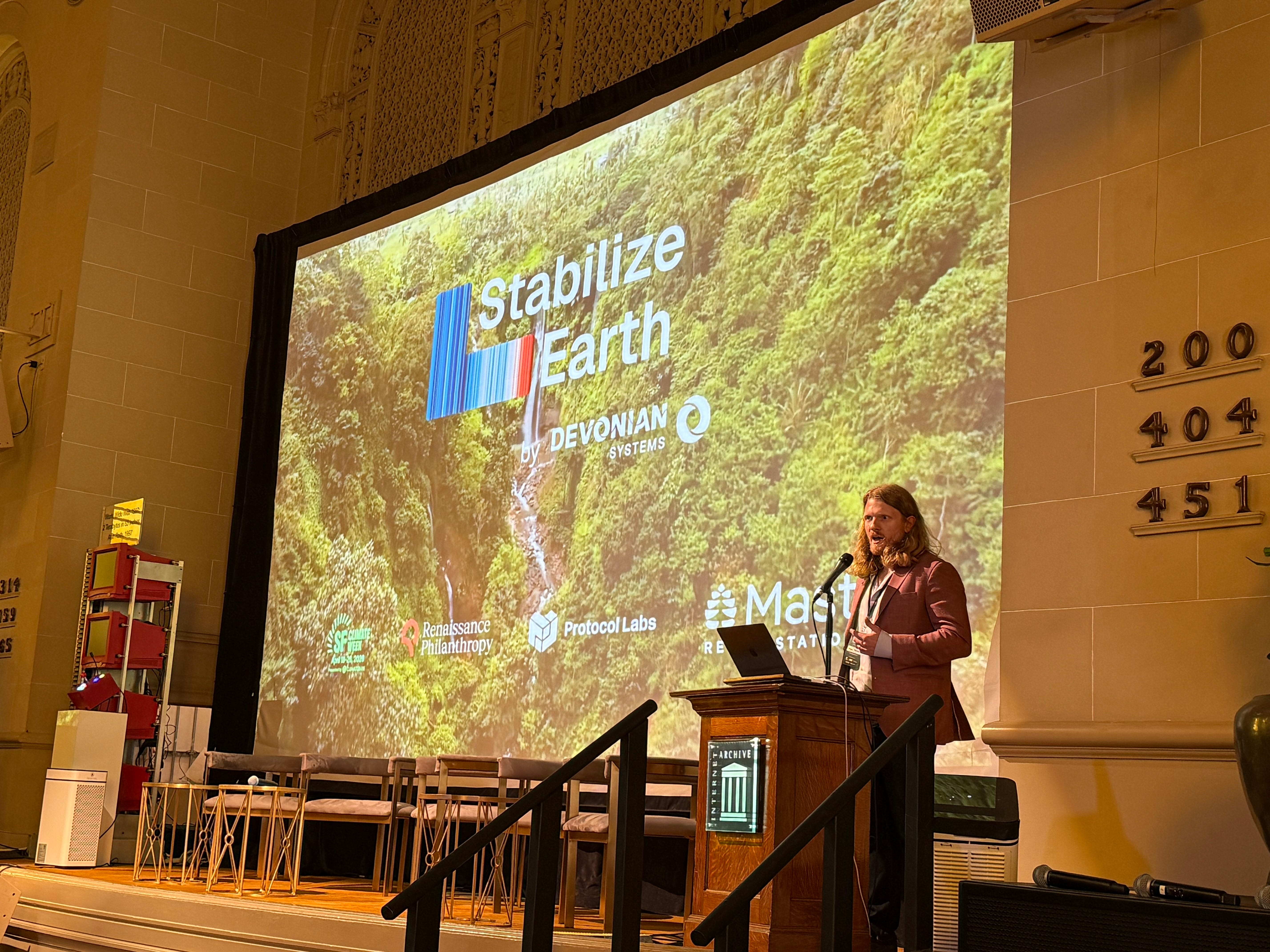
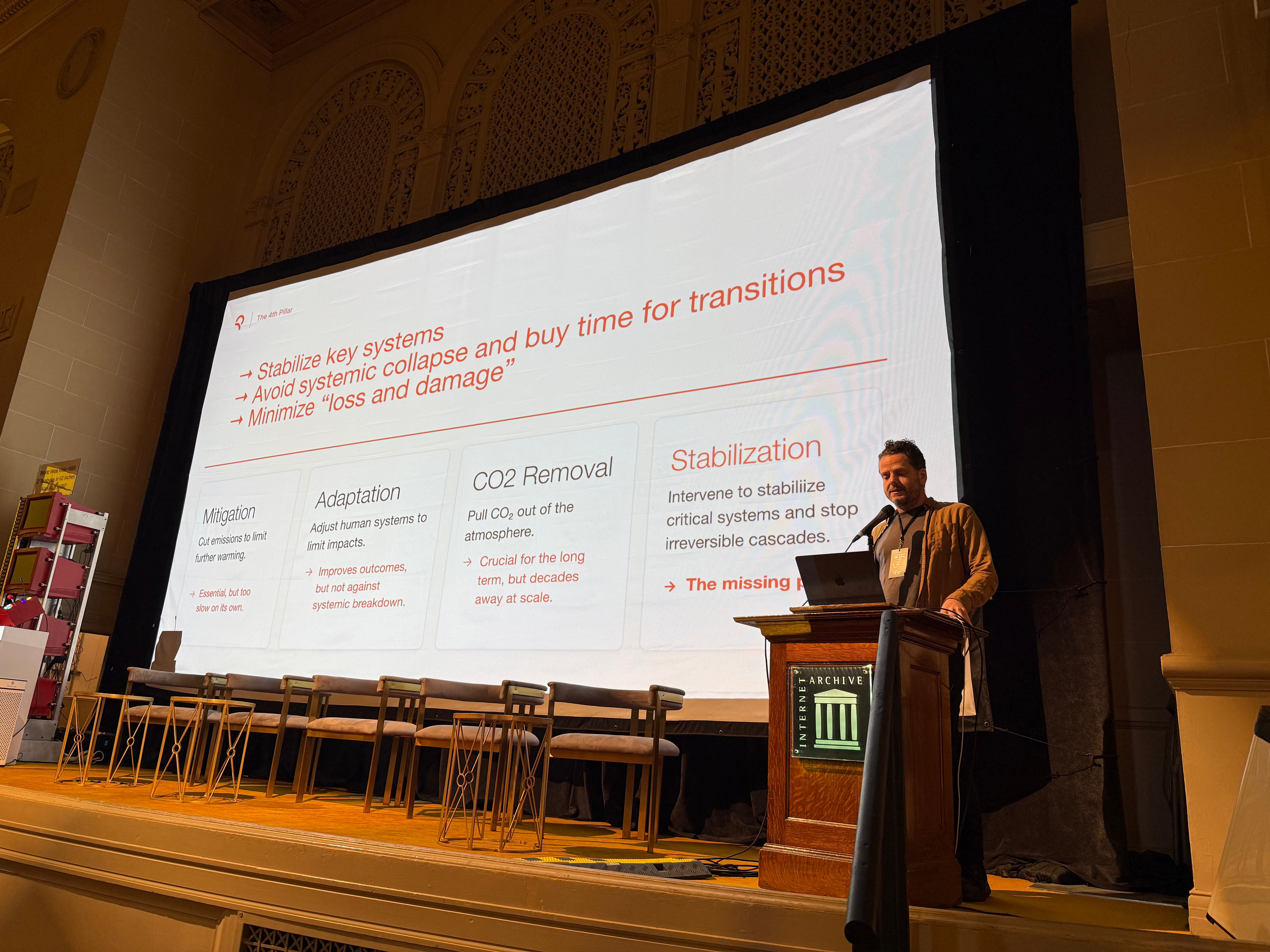
I've been arguing for months that climate stabilization deserves to be treated as a distinct field, the fourth pillar of climate response alongside mitigation, adaptation, and carbon removal. What's been thrilling in recent weeks is watching that framing take hold across the ecosystem independently, with organizations and researchers arriving at the same language on their own. Stabilize Earth was a chance to make it official.
I’ve been here before. In early 2018, before the IPCC had formally acknowledged that carbon removal was required, we held a conference called Reversapalooza. We stood up and said: carbon removal is needed, it’s possible, and here’s how we start building a field around it. At the time, “carbon removal” barely existed as a category. We didn’t have any sort of community of practice, let alone dedicated funding, or groups of people working in a way that could be called an “industry.” We helped change that.
Tuesday felt like the start of the same thing, but for a different and even more urgent set of challenges. The climate interventions field today faces many of the same obstacles carbon removal faced eight years ago: taboo, insufficient funding, the need for massive R&D, and an overwhelming sense of urgency. The night before the event, at a dinner for speakers, I said: I don’t know if you’ve all considered yourselves part of the same field, but I’m here to tell you that you are. You’re all working on things that stabilize Earth systems so we have a fighting chance with the slower solutions. So let’s draw a circle around this and acknowledge it.
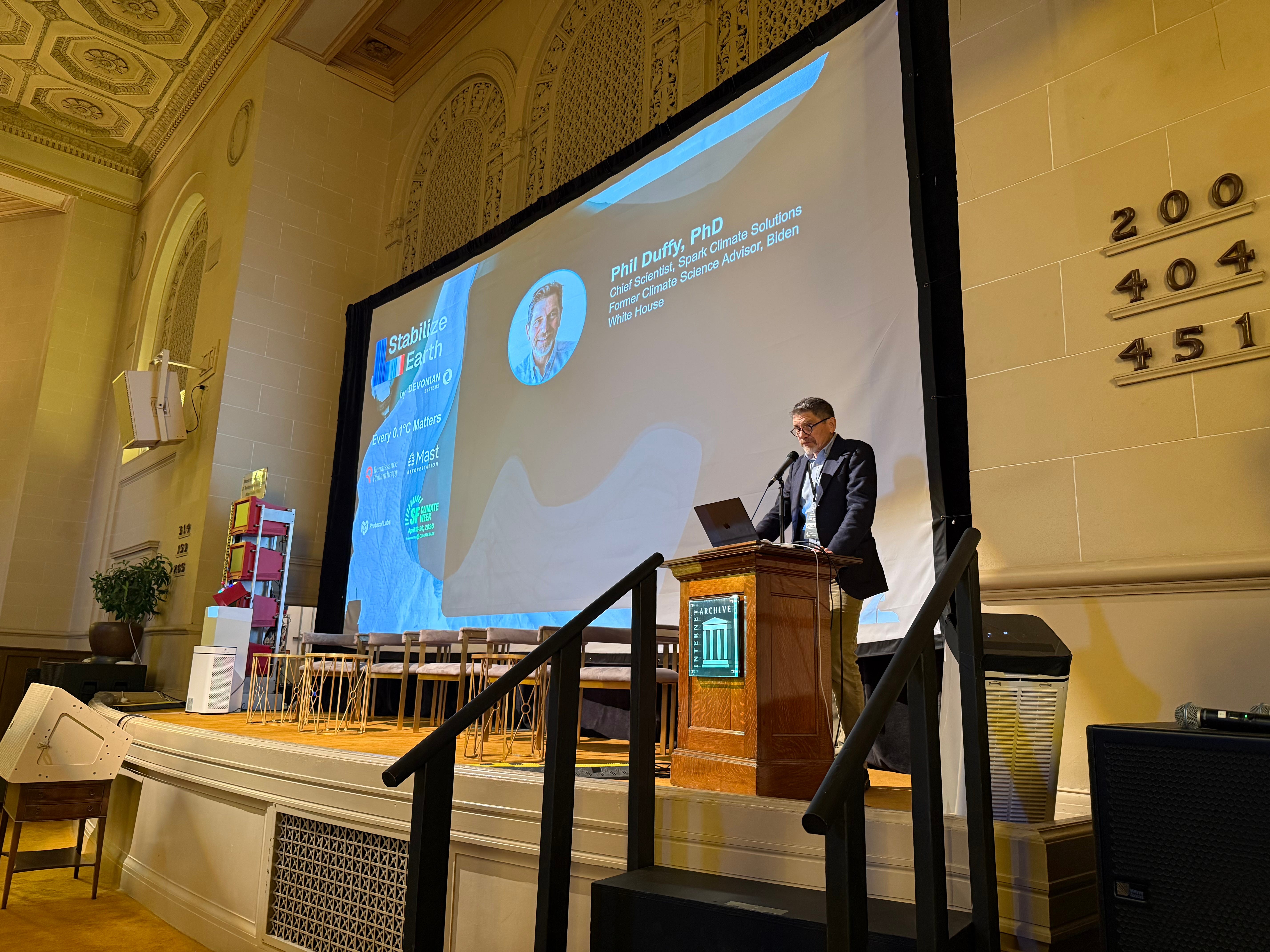
The day opened with Phil Duffy, chief scientist at Spark Climate Solutions and the former climate science advisor to President Biden, who co-authored the 2023 White House report on solar radiation management. He was followed by Joshua Elliott, chief scientist at Renaissance Philanthropy, who laid out the state of tipping point risks and the energy imbalance problem with total clarity.
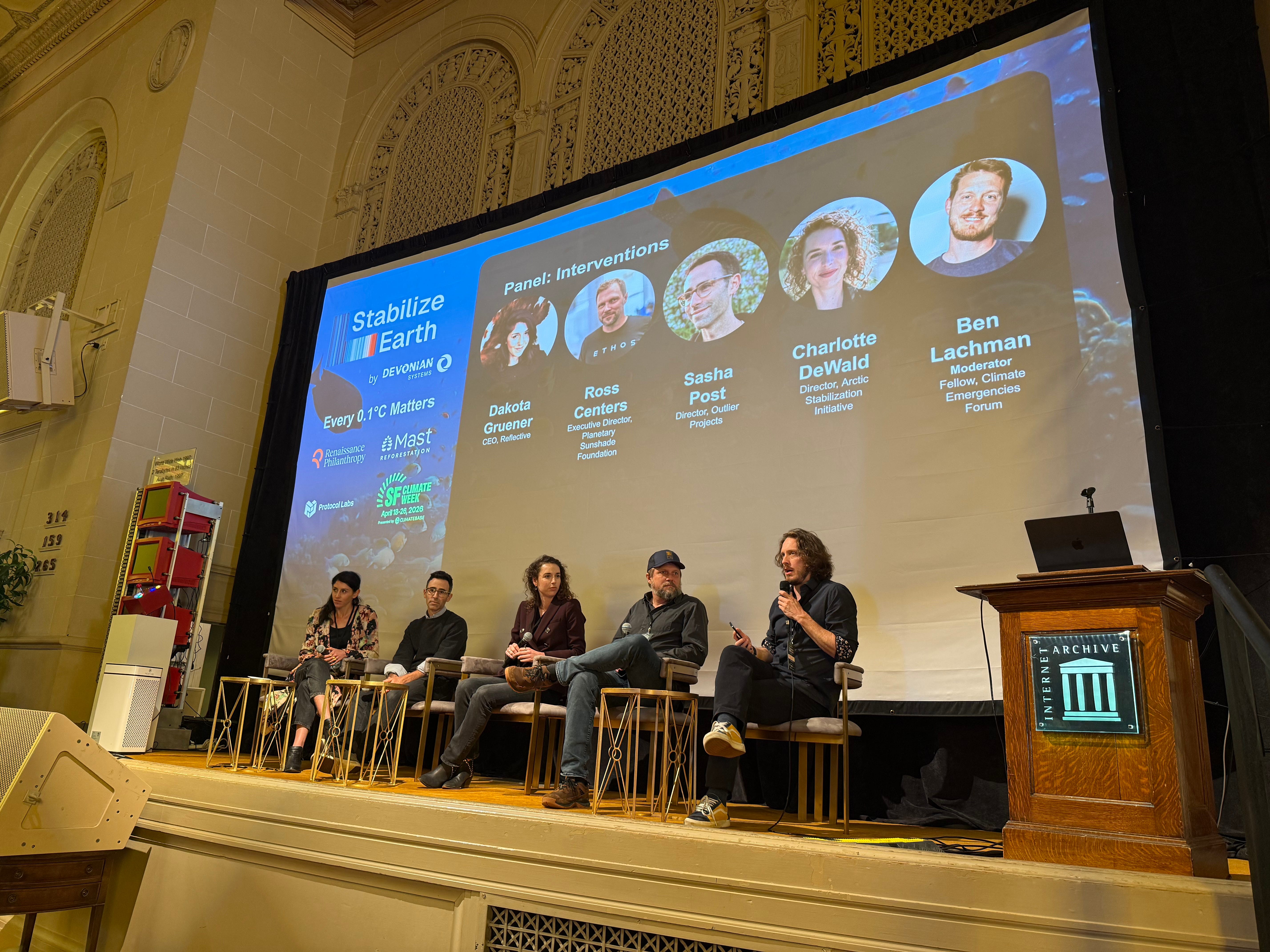
From there the day moved through panels, lightning talks, and conversations that covered an enormous range of work: from methane capture and destruction to rewilding the Arctic, to SAI and cloud thinning and weather modification, and of course, scalable carbon removal. The interventions panel, moderated by my partner in this work, Ben Lachman, brought together Dakota Gruener of Reflective, Ross Centers from the Planetary Sunshade Institute, Sasha Post from Outlier Projects, and Charlotte DeWald from the Arctic Stabilization Initiative, which essentially used this event to launch itself publicly.
We had lightning talks from Frost Methane Labs, Undercurrent, Spark Climate Solutions (on both atmospheric methane destruction and livestock enteric methane), Supercool Earth, Make Sunsets, Ocean Visions, OceanTherm, the Alaska Future Ecology Institute, Bright Ice Initiative, and more. Rob Jackson, one of the world’s leading climate scientists, presented on the state of greenhouse gas concentrations. On the carbon removal side, we heard from Isometric, CUR8, Mast Reforestation, GainForest, Rainbow Registry, and Devonian itself. Ryan Orbuch from Lowercarbon Capital, Ira Ehrenpreis from DBL Partners, and Johanna Wolfson from Azolla Ventures represented the investor perspective. And we closed the day with a fireside chat with Neal Stephenson, the author of Termination Shock, who joined virtually to discuss the cultural and imaginative dimensions of climate interventions.
But my favorite part of the day was seeing how excited everyone was in their lunch conversations. The tables were packed and the conversations were loud, with the room just buzzing. People from all sorts of backgrounds and experiences were talking with others who were experts in various domains of stabilization. I had the palpable sense that people had been waiting for this room to exist.
I recognize that feeling because I felt it at Reversapalooza. It’s the feeling of people discovering they’re not alone, and that the thing they’ve been working on in relative isolation is part of something larger that’s starting to take shape.
I said in my closing remarks that I see two priorities for the climate stabilization field right now. First, we need to grow the field itself, which means more people, more organizations, more coordination, and more visibility. Second, we need dramatically more philanthropic capital flowing into this space. We’re currently operating on the scale of tens of millions of dollars. We need hundreds of millions, and eventually governments need to be directing billions toward large-scale climate interventions.
We recorded the entire day, and I’ll be sharing videos as soon as they’re back from editing. In the meantime, you can see the full agenda and speaker lineup at stabilize.earth.
This was the first Stabilize Earth, and it won’t be the last. The field is just getting started, and I will have a lot more to say about what I’ve been working on behind the scenes to support it very soon.
I hope to see you at the next one!