
A Climate Goal for the Overshoot Era
Why stability—not just emissions—should be the organizing frame for climate policy


COP30 just wrapped in Belém. You’ve seen the takes already: disappointment about fossil fuels, cautious optimism about forests, and debates over whether it was a success or failure. I’m not going to re-litigate the negotiations because that’s not my beat.
But I want to name something that’s been crystallizing for me over the past several months. Something that explains why these conferences keep producing the same pattern of raised hopes and dashed expectations. Why smart, committed people keep talking past each other. Why, after 30 years of international climate negotiations, the world remains on course for almost 3°C of warming.
We are trapped in a paradigm that no longer fits our reality.
The Emissions Management Paradigm
Since the early 1990s, the international community has organized its climate response around one central concept: emissions management. The goal is to reduce greenhouse gas emissions, and success gets measured in tonnes of CO2 avoided or removed. This framing shapes everything! From international negotiations focused on emissions targets, to national policies aiming to cut emissions, to corporate sustainability programs that track emissions footprints.
This does make intuitive sense. Emissions cause warming, so we must reduce emissions. It’s clean, logical, and also increasingly insufficient.
The emissions paradigm has given us:
The UNFCCC (1992)
The Kyoto Protocol (1997)
The Paris Agreement (2015)
30 COPs and counting
And where are we? Emissions are still rising. We’ve breached 1.5°C. The gap between pledged action and required action grows wider each year. COP30’s own assessment: current commitments deliver less than 15% of the emissions reductions needed by 2035 to hold warming to 1.5°C.
The system’s purpose is what the system does, and this system doesn’t produce the results we need.
My Own Journey Through This Paradigm
I was a true believer in emissions management thinking. My entry into climate work came in 2015 when I started wondering: climate change seems like a problem of too much carbon dioxide in the atmosphere, so why don’t we pull that CO2 back out? That question led me down the path of carbon removal, eventually to co-founding Nori and spending nearly a decade building infrastructure for the CDR industry.
During those years, I used to make a specific argument. I’d say: “We spend so much time focusing on the global temperature metric. What we should really be focusing on is the global atmospheric carbon number. If we could just get that number back down to 350 parts per million, we’d be in good shape.” I thought I was being clever. I’d add: “What even is the average global temperature? It’s like asking what’s the average global phone number. How useful is that?”
I was wrong. Or rather, I was incomplete.

Yes, it’s essentially correct that if we could get atmospheric carbon concentration back down to 300 or 350 ppm, we’d be a lot better off. That’s accurate as far as it goes.
But now that we’re in temperature overshoot—now that we face catastrophic risks to food systems, to insurance markets, to migratory patterns and ecosystems, now that tipping points loom within decades rather than centuries—the carbon-focused frame is no longer enough on its own. The timeline matters, the rate of change matters, the stability of the systems we depend on matters. And managing atmospheric carbon, while necessary, doesn’t directly address any of those.
I had to shift my own paradigm. That’s what I’m trying to articulate here.
Why We Talk Past Each Other
Last week, I wrote about the blurry line between adaptation and geoengineering. I was trying to understand why people who agree on the severity of the climate crisis can reach completely opposite conclusions about the same intervention.
When I shared the piece on LinkedIn, climate researcher Daniele Visioni responded with a link to something he’d written that cut right to it: “SRM only makes sense if considered through the lenses of adaptation, and not through those of mitigation.”
Through the lens of mitigation—the emissions paradigm—solar radiation management looks like cheating. It doesn’t reduce emissions. It doesn’t address the “root cause.” It could create moral hazard by reducing pressure to decarbonize. It’s a techno-fix that lets polluters off the hook.
Through the lens of adaptation—protecting lives and ecosystems from harm—SRM looks like an obvious tool to consider. We already accept that we need to adapt to climate impacts. We build seawalls, develop drought-resistant crops, install cooling centers. If we could reduce some of those impacts by reflecting a bit more sunlight, why wouldn’t we at least research that option?
Same intervention, but people reach opposite conclusions depending on which lens they’re looking through.
Carbon removal faces similar dynamics. Through the emissions lens, CDR is “negative emissions”—valuable primarily as an accounting offset. Through a different lens, it’s drawing down the excess carbon that’s destabilizing our climate system.
The paradigm you start with determines where you end up.
What Do We Actually Want?
As I mentioned last week, the systems theorist Donella Meadows identified the most powerful leverage points for changing complex systems. Near the top of her list—more powerful than changing rules, incentives, or even the structure of information flows—is changing the existing paradigm. The mindset out of which the system arises.
Which raises a question we don’t ask often enough: What do we actually want?
“End fossil fuels” is a method. “Net zero emissions” is a target. “Stay below 1.5°C” is a threshold.
But what’s the underlying goal?
I think what we actually want is stable conditions. Temperature stability. Ecosystem stability. The roughly predictable climate patterns that human civilization developed within. The conditions where we can grow food reliably, where coastlines stay where they are, where extreme weather remains extreme rather than routine, and where the systems we depend on keep functioning.
The Stability Paradigm
What if we organized our climate response around stability rather than emissions?
The organizing question shifts from “How do we reduce emissions fast enough?” to “How do we restore and maintain stable conditions?”
That sounds like a small reframe, but it’s not:
Different metrics become central. We already track temperature trajectory. And various efforts track ecosystem health, tipping point research, and climate pattern changes. But these metrics are currently subordinate to the emissions framework. In a stability paradigm, they’d be primary. The question shifts from “are we hitting our emissions targets?” to “are we actually stabilizing the system?”
All tools are evaluated the same way. Emissions reduction matters because high emissions destabilize. Methane reduction matters because it can affect temperature faster than CO2 reduction. Carbon removal matters because it helps return atmospheric CO2 toward stability. Cooling interventions matter because they can stabilize temperature faster while other tools catch up. Ecosystem protection matters because intact ecosystems buffer against instability. Catastrophic risk prevention matters because some instabilities, once triggered, cannot be reversed. No tool is inherently virtuous or suspicious—each is assessed by its contribution to stability, on the timeline that matters.
Urgency is calculated differently. In the emissions paradigm, urgency is about cumulative carbon budgets. In the stability paradigm, urgency is about proximity to tipping points and rate of destabilization. These can point in different directions. We might be “on track” for a carbon budget while racing toward an ice sheet collapse that nothing in our emissions plans addresses.
Success looks different. Success isn’t a percentage reduction from a baseline. Success is restored stability. A climate system that’s returned to predictable patterns that human civilization can work within.
Why Stability Resonates Now
There’s a reason this framing might land differently in 2025 than it would have a decade ago: we feel instability everywhere now.
The last ten years have delivered Brexit, Trump, a global pandemic, war in Ukraine, war in Gaza, the collapse of trust in institutions, social media fragmenting consensus reality, economic whiplash where nobody can agree if things are good or bad. The ground keeps shifting and nothing feels settled.
Climate change isn’t separate from this. It’s a threat multiplier that makes every other form of instability worse. Climate-driven migration increases political tensions, extreme weather disrupts supply chains, agricultural volatility feeds economic uncertainty…and it all compounds.
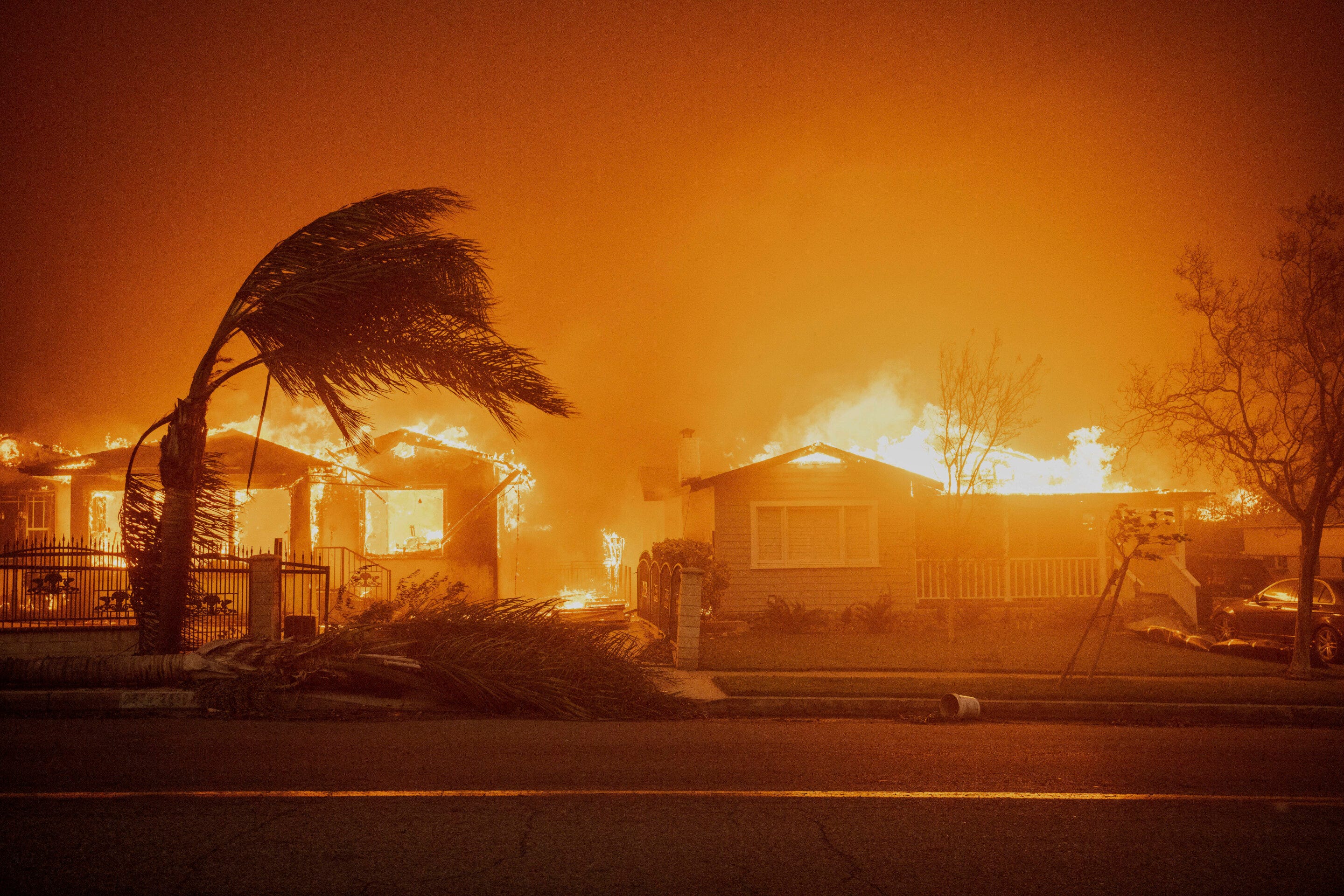
The emissions paradigm frames climate as one more problem on the pile. The stability paradigm reveals something different: climate stability is a precondition for addressing everything else. It’s not just another crisis competing for attention. It is the foundation that makes other solutions possible.
This is why I’ve been arguing that cooling interventions aren’t “Plan B.” They’re potentially essential for Plan A to succeed. If we can stabilize temperature faster, we create the conditions where emissions reduction and carbon removal can actually work at scale. We buy time not just for climate solutions, but for addressing everything else too.
Climate stability isn’t separate from political stability, economic stability, or food security. It’s underneath all of them.
The Void
What troubles me is that I don’t see anyone articulating what a holistic stability-focused climate strategy actually looks like.
We have emissions scenarios, net-zero roadmaps, carbon budget calculations, models of how much warming different pathways produce.
What we don’t have is a comprehensive framework that:
Works backward from the goal of stable conditions
Evaluates all available tools—reduce, remove, adapt, cool—against that goal
Addresses the timeline honestly (emissions reductions won’t lower temperature at all, just slow its rise; carbon removal won’t meaningfully affect temperature until the 2100s)
Maps the relationship between climate stability and the other forms of stability we need
Provides a strategic plan rather than a negotiating position
The emissions paradigm has produced elaborate infrastructure: COPs, NDCs, carbon markets, disclosure frameworks, and net-zero pledges. The stability paradigm has almost nothing. There is no international framework, no shared metrics, and no common language.
I believe that’s why we keep running the same play at every COP and getting the same results. We’re negotiating within a paradigm that can’t produce what we actually need.
Shifting the Paradigm
I’m not naive about how hard paradigm shifts are. The emissions paradigm is embedded in international law, institutional mandates, career incentives, and mental models across the climate community. It’s not going to change because someone writes a newsletter post pointing out its limitations.
But paradigm shifts do happen. They start small—a few people seeing something differently, naming it, building frameworks that help others see it too. The old paradigm doesn’t get refuted so much as it gradually becomes obviously inadequate to more and more people.
I think we’re at that moment. You can see it in the repeated disappointments of international negotiations, in the growing recognition that even perfect emissions reduction won’t prevent dangerous warming in time, and in the emergence of cooling interventions as a serious research area. You can see it in the visceral experience of climate instability—heat domes, megafires, impossible hurricanes—that makes “emissions targets” feel disconnected from what’s actually happening.
The paradigm is already shifting. Can we accelerate that shift fast enough to matter?
What would it look like to take stability seriously? To develop metrics for it, institutions around it, a strategic framework that integrates all our tools in service of it?
This is the direction I’ve been building toward. Not just naming the paradigm shift, but trying to articulate what a stability-focused strategy actually looks like in practice. The honest accounting of where we are, what tools we have, what timelines we’re working with, and what it would take to restore stable conditions to our climate system.
I don’t have it all figured out yet. But I’m increasingly convinced this is both the right question, and that answering it well matters far more than winning the next round of negotiations within a paradigm that keeps producing the same results.
We’ve been managing emissions for 30 years and the climate keeps destabilizing. Maybe it’s time to try managing for stability instead.
More on this to come.
This and every other article I publish is free because I want these ideas to reach as many people as possible. Paid subscriptions are how I keep doing this work independently. They allow me to follow the research on climate interventions and meet the researchers, practitioners, founders, and policymakers shaping how this landscape evolves.
Paid members get access to our community chat, where we discuss the latest developments in climate interventions and make sense of them together. I’m sharing all the really interesting videos, papers, stories, and other links I’m coming across in there. If you’ve found value in this newsletter, I’d appreciate your support.
Hi Paul - great piece, and seems crazy to me this is not mainstream thinking. Are you aware of Spencer Glendon and his work at Probable Futures? May be a good sounding board for next steps as I know he thinks a lot about climate stability but I’m unsure how much he’s thought about things like SRM, etc, in addition to CO2 emissions. Also, the group at Spark Climate may have thoughts on this specific to methane as well?
Great piece summarizing the times; like that 1.5 has been breached is a clear and multiple medium message, being obfuscated- temperature is a physical state not a political declaration I think 2.7 F should go with that and the clearing up- what it means the disruption from 20th century climate compare today. The human risk of extinction has gone from near none to probable certainty at the current path, and the good and great news is the car wheel can be yanked back, but that is going to be major shifts, which we absolutely have the resources to handle , even more change to the human experience is locked in, with a lot of work and effort from a path to hell environment to the best one people have every had, on every measure including the ones we haven't been measuring like happiness